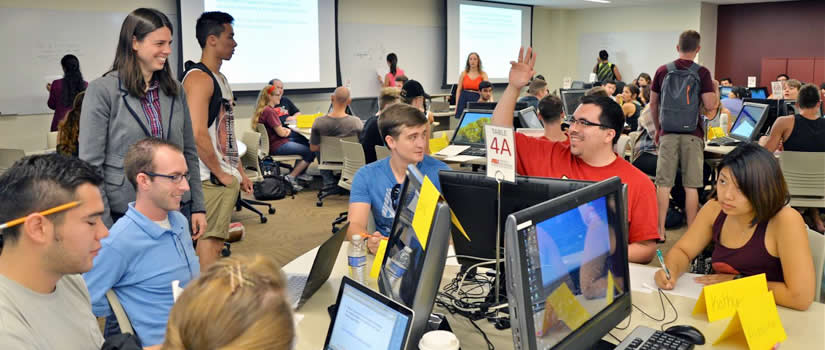
Managing a classroom is more than just being an expert in your field of study. Whether you are a tenured faculty or a new instructor, this certificate program will assist you in:
- Understanding today’s student and how to structure your class to foster a sense of belonging
- Developing proactive and reactive strategies for handling academic misconduct
- Practicing how to avoid and address classroom conflicts
Program Requirements
- Attend four primary sessions
- Complete two elective sessions
Participants will have 3 academic semesters (not including summer semesters) to complete the certificate.
Required Workshops Offered Fall 2026
Thursday, August 27, 10:05am - 11:20am - Webinar
Clearly articulating classroom expectations helps to set the foundation for a mutually beneficial course. Research shows that persistence and retention is connected to student's sense of belonging. Furthermore, students who engage in quality interactions with faculty are retained at a higher rate (Astin 1977, 1993). As a faculty member, it is important to assist in developing this sense of belonging and aid in students persistence and retention. This session will cover pedagogical strategies and ways to negotiate positive norms within your classroom to assist you in developing a meaningful academic environment. Register
Tuesday, September 8, 10:05am - 11:20am - Webinar
Creating an environment of integrity within the classroom truly takes a village. Faculty, administrators, and students all play a role in maintaining an ethical campus community. This workshop will explore preventative tools to address classroom roadblocks. Register
Wednesday, October 7, 10:05am - 11:20am - Webinar
In this session we will discuss the academic misconduct trends we are seeing online and in person with our students. Additionally, we will discuss how to identify and address these common violations while maintaining a productive instructor/student relationship. Register
Thursday, November 5, 10:05am - 11:20am - Webinar
Engaging in conflict is challenging whether you are an experienced instructor or new to your role. A common strategy is to ignore the behavior due to our own discomfort, concern over retaliation or fear that our intervention may cause more harm or disruption. We will identify what our fears are about classroom disruption and use case study examples to practice strategies to stretch participants' comfort zones. This workshop will also explore Gerald Amada's research from Coping with Misconduct in the College Classroom and provide participants with tangible strategies to prevent and respectfully address disruptive behavior. Register
How to Earn a Certificate of Completion
- Select a certificate you want to earn.
- Review the required workshops.
- Register for and attend all required workshops within the time frame specified.
- Look for an email from cte@sc.edu with your digital certificate.
How to Check Your Progress
Participants can check their progress online by following the steps below.
- Log into Registration and Tracking System for Workshops and Events using your CTE Training Account credentials.
- Click on the specific learning plan for the certificate of completion program you would like to view. The learning plan button is located on the left-hand side in the menu screen.
- Click “View” to generate a personalized learning plan status report. The report will show the workshops you have taken, and remaining workshop requirements.
The learning plans also provide a status progress update.
- Partial means you have met some of the requirements for a specific certificate of completion program.
- Complete means you have met all the requirements for a specific certificate of completion program.
- Not Started means you have not completed any of the requirements for a specific certificate of completion program.
Completed your certificate?
At the conclusion of each semester, reports are run to determine who has completed each certificate. Digital Certificates will be emailed. If you do not receive your certificate by the middle of the following semester, kindly contact cte@sc.edu for assistance.